Introduction
Air fryers have moved from a niche kitchen gadget to something close to a kitchen staple for a lot of households, largely because they promise a familiar kind of crispiness without needing a deep fryer full of oil or a full-sized oven running for an hour. As the category has matured, manufacturers have layered in more functions beyond basic air frying, often folding in roasting, reheating, and dehydrating into the same appliance so it can pull more weight in a kitchen that might not have room for several single-purpose machines.
The Ninja Air Fryer with Air Crisp, model AF141, sits squarely in that more versatile category. It’s a 5-quart capacity unit with four cooking functions, air fry, roast, reheat, and dehydrate, along with a fairly high maximum temperature and a 1750-watt motor. This article looks at what this particular model offers, the kinds of everyday cooking tasks it tends to suit, and the details worth thinking through before deciding if it’s the right fit for your kitchen.
What Is the Ninja Air Fryer with Air Crisp (AF141)?
This is a countertop electric appliance that cooks food using rapid, circulating hot air rather than submerging it in oil, which is the basic principle behind air frying generally. The AF141 model holds 5 quarts, which the manufacturer notes is enough to fit up to four pounds of fries in a single batch, giving a practical sense of scale for family-sized cooking rather than just single servings.
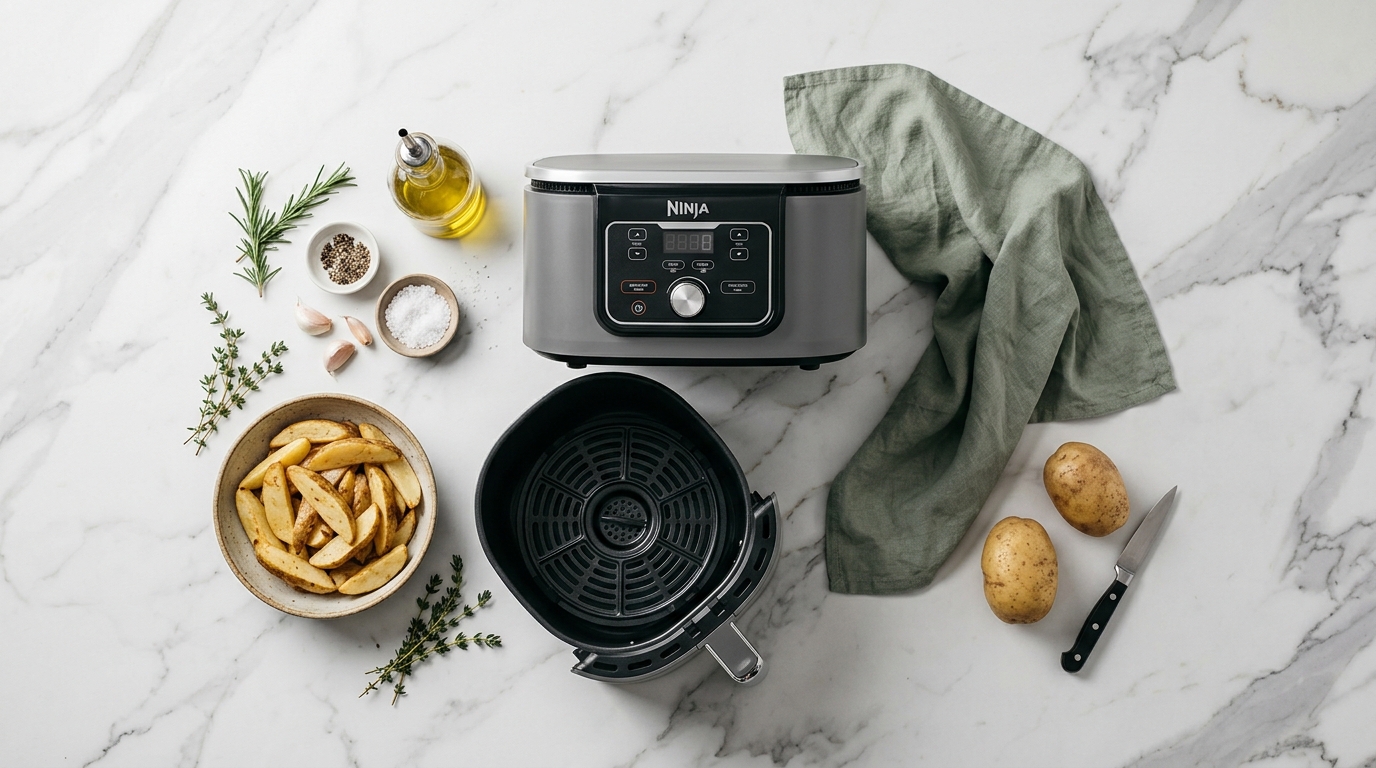
Beyond air frying, this unit includes three additional functions, roasting, reheating, and dehydrating, positioning it as a 4-in-1 appliance rather than a single-purpose air fryer. It reaches a maximum temperature of 400°F and runs on a 1750-watt motor, and it comes with a nonstick basket and a crisper plate, along with a grey exterior finish.
Key Features
4-in-1 Functionality: Air Fry, Roast, Reheat, Dehydrate
Rather than being limited to just air frying, this model includes four distinct cooking functions. Air frying handles the crisping tasks most people associate with the category, roasting is suited to larger cuts of meat or vegetables cooked at a steadier, more even temperature, reheating is designed to bring leftovers back to a fresher texture rather than the sogginess that can come from microwaving, and dehydrating is intended for slowly removing moisture from foods like fruit slices or jerky over an extended period.
5-Quart Capacity
At 5 quarts, and with a stated capacity of up to four pounds of fries, this unit is sized for family-style cooking rather than strictly single servings. This capacity tends to be a reasonable middle ground, large enough to prepare a full meal for several people without becoming the kind of oversized appliance that dominates counter space.
1750-Watt Motor
The higher wattage motor is generally associated with faster heating and more efficient air circulation, which can translate into quicker cook times and more consistent crisping across a full basket of food compared to lower-wattage units.
400°F Maximum Temperature
Reaching up to 400°F allows this air fryer to handle a fairly wide range of cooking tasks, from lower-temperature dehydrating to higher-heat air frying and roasting that calls for more intense, direct heat to achieve a crisp exterior.
Nonstick Basket and Crisper Plate
The included nonstick basket is designed to make food release and cleanup more manageable, while the crisper plate sits inside the basket to elevate food, allowing hot air to circulate underneath as well as around it, which is part of what helps achieve an evenly crisped texture rather than food that’s only browned on top.
Compact Countertop Design
Despite its family-sized capacity, the unit is designed as a fairly standard countertop appliance rather than a bulky, oversized machine, which helps it fit into typical kitchen counter space alongside other appliances.
How It Can Be Used
Given its four built-in functions, this air fryer tends to lend itself to a fairly broad range of everyday cooking tasks.
Classic Air-Fried Foods French fries, chicken wings, and other typically fried foods can be prepared using the air fry function, achieving a crisped exterior using hot air circulation rather than submerging the food in oil.
Roasting Vegetables and Meats The roast function is generally suited to larger items like a whole chicken, a cut of pork, or a tray of root vegetables, using steadier, more even heat compared to the higher-intensity air fry setting.
Reheating Leftovers Rather than relying on a microwave, which can leave certain foods soggy or unevenly heated, the reheat function is designed to restore a crisper texture to leftovers like fried foods, pizza, or roasted vegetables.
Dehydrating Fruits, Vegetables, and Jerky The dehydrate function operates at lower temperatures over a longer period, making it suitable for preparing dried fruit slices, vegetable chips, or homemade jerky, which is a different approach entirely from the higher-heat, faster cooking style of air frying.
Family-Sized Meals Given the 5-quart capacity and stated ability to hold up to four pounds of fries, this unit can handle full meals for a family or small gathering in a single batch, rather than needing to cook in several smaller rounds.
Everyday Weeknight Cooking Because it combines several functions in one appliance, this air fryer can serve as a fairly flexible, everyday cooking tool, handling different parts of a meal, a roasted protein alongside air-fried vegetables, for example, without needing to switch to a separate appliance for each component.
Who It May Be Suitable For
This type of multi-function air fryer tends to suit a fairly wide range of households, though some will get more consistent use out of it than others.
Families or households cooking for several people. The 5-quart capacity and four-pound fry capacity are well matched to preparing full meals rather than just individual portions.
Those looking to consolidate kitchen appliances. Because it combines air frying, roasting, reheating, and dehydrating into one unit, this appliance may appeal to households looking to reduce the number of individual single-purpose appliances they need to store.
People interested in reheating leftovers without sacrificing texture. The dedicated reheat function may be particularly useful for anyone who regularly deals with leftovers, such as fried or roasted foods, that don’t hold up well in a microwave.
Anyone interested in dehydrating foods at home. The dehydrate function opens up a use case beyond typical air frying, appealing to those interested in preparing dried snacks or ingredients without a separate dehydrator appliance.
Households looking for a moderate-capacity, everyday cooking appliance. The 5-quart size is generally practical for regular use without requiring an oversized appliance dedicated to occasional large-batch cooking.
This appliance may be less necessary for someone who already owns several dedicated appliances covering these same functions and doesn’t feel a need to consolidate, or for individuals cooking only for themselves who might find a smaller-capacity air fryer more appropriately sized.
Important Things to Consider
Before deciding whether this particular air fryer suits your kitchen, there are a few practical points worth thinking through.
Counter and Storage Space While designed as a fairly standard countertop unit, a 5-quart capacity air fryer still requires a reasonable amount of counter space during use and storage space when not in use, which is worth factoring in for smaller kitchens.
Learning Each of the Four Functions With four distinct cooking modes, there’s some value in understanding which function suits which type of food and how temperature and time settings should generally be adjusted for each. Reviewing the included instructions, and any recipe guidance provided, can help shorten that initial learning period.
Batch Size Realistic Expectations While the basket is rated to hold up to four pounds of fries, achieving the crispiest results typically depends on not overcrowding the basket, since air needs to circulate freely around the food. For very large batches, cooking in more than one round may still produce better texture than trying to fit everything in at once.
Cleaning the Basket and Crisper Plate Regular cleaning of the nonstick basket and crisper plate is important both for food safety and for maintaining the nonstick surface over time. Following the manufacturer’s care instructions can help extend the useful life of these components.
Dehydrating Takes Considerably Longer Than Air Frying The dehydrate function operates at lower temperatures over an extended period, often several hours, which is a different time commitment entirely compared to the relatively quick cook times associated with air frying. Planning accordingly is worthwhile if you intend to use this function regularly.
Electrical and Wattage Considerations At 1750 watts, this is a fairly power-hungry countertop appliance, so it’s worth being mindful of what other appliances might be running on the same electrical circuit if you’re using it alongside other high-wattage kitchen equipment.
Comparing General Categories of Air Fryers
To put this model into context, it can help to compare it against the broader categories of air fryers available today, without singling out any specific competing brand or product.
Multi-Function Air Fryers (like the Ninja AF141) These combine air frying with additional functions such as roasting, reheating, or dehydrating, offering more versatility from a single appliance. The trade-off is that a unit handling several functions may involve a bit more of a learning curve to use each mode effectively, compared to a simpler, single-purpose device.
Basic, Single-Function Air Fryers These are generally designed around air frying alone, often with simpler controls and sometimes smaller capacities. They can be a good fit for those who specifically want straightforward air frying without additional functions they may not use.
Larger Air Fryer Ovens Positioned at the higher-capacity end of the category, these units often resemble small countertop ovens with air frying capability built in, suited to those who want to cook multiple trays at once or handle larger roasting tasks, generally at the cost of a considerably larger footprint.
Choosing Between These Categories The right choice comes down to how many separate functions you actually expect to use regularly, how much capacity your household typically needs, and how much counter or storage space you’re able to dedicate to the appliance. A multi-function, moderate-capacity model like this one tends to suit households that want a reasonably versatile everyday cooking tool without stepping up to a larger, oven-style unit.
Frequently Asked Questions
Does the basket need to be shaken or flipped during cooking? Many air fryer recipes recommend shaking or flipping food partway through the cooking cycle to help achieve even crisping, particularly for smaller items like fries or wings. Checking specific recipe guidance can help clarify when this step is recommended.
Can the dehydrate function be used for making jerky? Yes, dehydrating functions on air fryers of this type are commonly used for preparing jerky, dried fruit, and vegetable chips, though achieving safe, properly dried results typically depends on following recommended times and temperatures for the specific food being prepared.
Is the nonstick basket dishwasher-safe? This can vary, so it’s worth checking the manufacturer’s specific care instructions or the current product listing to confirm the recommended cleaning method for the basket and crisper plate.
How does the reheat function differ from just using the air fry setting again? The reheat function is generally calibrated with different time and temperature settings specifically intended to restore texture to already-cooked food, rather than cooking raw ingredients from scratch, which is what the air fry function is primarily designed for.
Does a 5-quart capacity really fit four pounds of fries? According to the product’s stated capacity, yes, though achieving the best texture with a full batch typically still depends on not overcrowding the basket too tightly, since air circulation is central to how air fryers achieve a crisp result.
What’s the difference between roasting and air frying on this appliance? Roasting is generally associated with steadier, more even heat suited to larger cuts of meat or vegetables, while air frying tends to use higher-intensity circulating heat aimed at achieving a crisped exterior more quickly, similar to traditional frying.
Conclusion
The Ninja Air Fryer with Air Crisp, model AF141, combines a family-sized 5-quart capacity with four distinct cooking functions, air frying, roasting, reheating, and dehydrating, positioning it as a fairly versatile everyday kitchen appliance rather than a single-purpose device. With its 1750-watt motor, 400°F maximum temperature, and included nonstick basket and crisper plate, it’s built to handle a fairly wide range of cooking tasks within one unit.
As with any multi-function appliance, thinking through which of these four functions you’re likely to use regularly, along with your household’s typical batch sizes and available kitchen space, can help clarify whether this particular model is a practical fit for your cooking habits.