Introduction
Homemade frozen desserts have traditionally involved a fair amount of patience: churning machines that need pre-frozen bowls, long waits between steps, and often a fairly limited set of textures you could realistically achieve at home. Over the past few years, a newer style of countertop ice cream maker has changed that equation somewhat, relying on a different process built around freezing a base first and then processing it, rather than churning while it freezes.
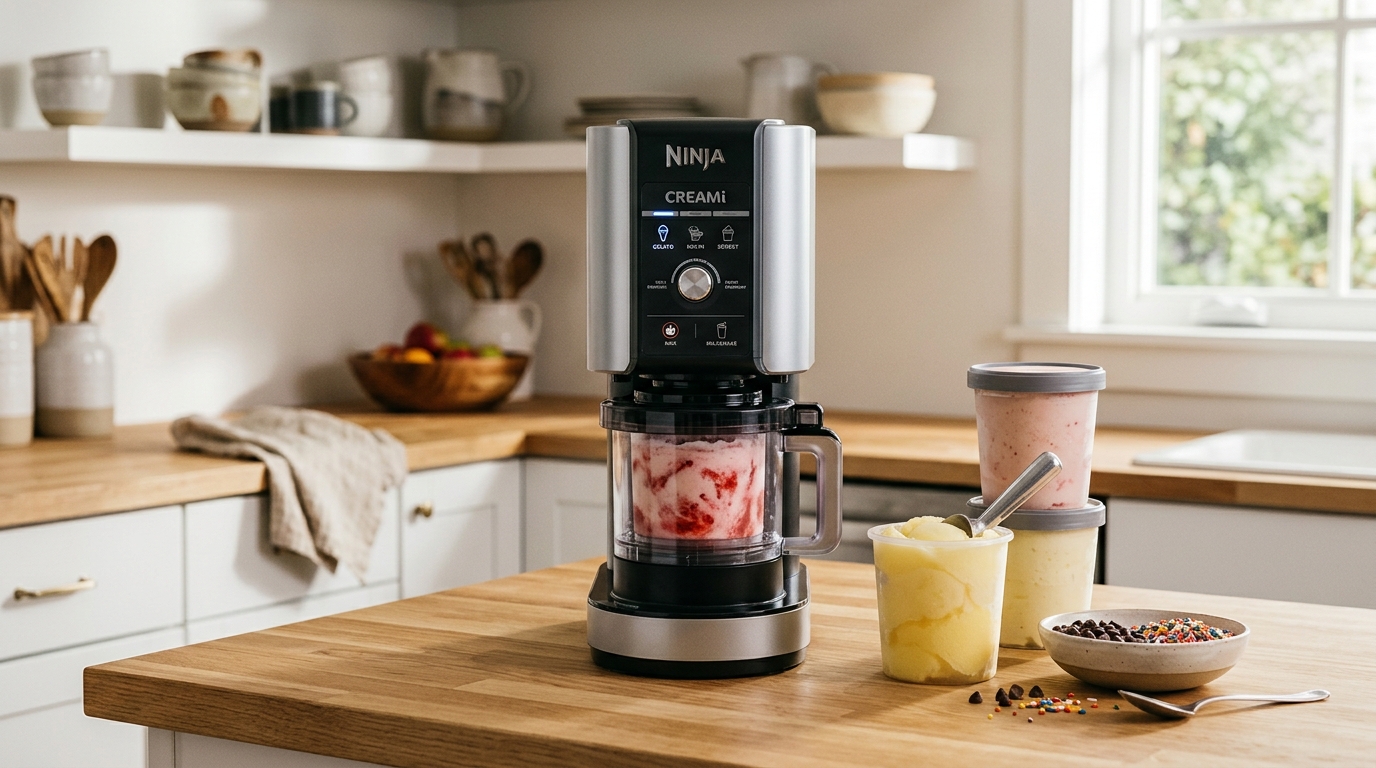
The Ninja CREAMi Ice Cream Maker, model NC301, is one of the more well-known examples of this approach. It’s designed to produce not just traditional ice cream, but also gelato, milkshakes, sorbet, and smoothie bowls, using a system built around one-touch programs and reusable pint containers. This article takes a closer look at how this appliance works, what it can realistically be used for, and what’s worth thinking about before bringing one into your kitchen.
What Is the Ninja CREAMi Ice Cream Maker?
The CREAMi system works differently from traditional churn-style ice cream makers. Rather than churning a liquid base as it freezes, this appliance starts with a base mixture that’s frozen solid in one of the included pint containers, typically in a standard freezer, and then processed using the machine itself, which shaves and re-mixes the frozen block into a smooth, scoopable texture.
The NC301 model includes seven one-touch programs, each tailored to a different type of frozen treat, along with two pint containers and lids for preparing and storing bases. It’s built in a fairly compact size relative to some other kitchen countertop appliances, and it’s often marketed as being approachable enough for families, including for use with kids, given the relatively simple, guided process involved.
Key Features
7 One-Touch Programs
Rather than requiring manual adjustment of settings for each type of frozen dessert, this machine includes seven pre-programmed options, generally covering categories like ice cream, gelato, sorbet, milkshake, smoothie bowl, and others depending on the base being used. Selecting the appropriate program is intended to simplify the process considerably compared to figuring out settings manually.
Compatibility with Multiple Frozen Dessert Styles
Beyond traditional ice cream, this appliance is designed to handle a fairly wide range of frozen treats, including gelato, sorbet, milkshakes, and smoothie bowls. This versatility is one of the more notable aspects of the CREAMi system, since a single base recipe can sometimes be adapted into different textures and styles depending on which program is used.
Mix-In Capability
The system also supports incorporating mix-ins, such as chocolate chips, cookie pieces, or fruit, into the finished product after the initial processing cycle. This allows for more customized combinations, similar to how mix-ins are often added at ice cream shops, rather than being limited to a single flavor straight out of the container.
Two Included Pint Containers with Lids
The appliance comes with two reusable pint-sized containers and lids, which are used both for freezing the base mixture and for running it through the processing cycle. Having two containers on hand allows for preparing more than one flavor or batch in sequence, or having a second batch ready to freeze while one is being processed or enjoyed.
Compact Footprint
Compared to some larger kitchen appliances, this model is designed with a relatively compact footprint, which can make it easier to fit on a counter or store in a cabinet without dedicating an excessive amount of kitchen space to it.
Designed with Family and Kid-Friendly Use in Mind
The one-touch program design is intended to simplify the process enough that older kids, with appropriate supervision, can participate in preparing frozen treats, which is part of why this appliance is often positioned as a family-friendly kitchen tool.
How It Can Be Used
Because of its program-based design and support for multiple dessert styles, this appliance tends to lend itself to a fairly wide range of frozen treat preparation.
Traditional Ice Cream The most straightforward use case involves preparing a classic ice cream base, freezing it in one of the pint containers, and running it through the appropriate program to achieve a smooth, scoopable texture.
Gelato For those who prefer a denser, richer style of frozen dessert, the gelato program offers an alternative texture profile using a different base ratio, generally with less air incorporated compared to traditional ice cream.
Sorbet Fruit-based, dairy-free bases can be processed using the sorbet program, offering a lighter frozen dessert option for those looking for something other than a cream-based treat.
Milkshakes Rather than preparing a separate frozen ice cream base, this appliance can also produce milkshakes directly, blending frozen mixture into a drinkable, shake-like consistency.
Smoothie Bowls For a more breakfast-oriented or lighter option, the smoothie bowl program is designed to produce a thicker, spoonable texture using frozen fruit and other smoothie-style ingredients.
Mix-In Combinations Once a base has been processed, additional ingredients like candy pieces, cookie chunks, or fresh fruit can be incorporated using the mix-in function, allowing for more personalized flavor combinations similar to custom orders at an ice cream shop.
Family Activities and Kid-Involved Cooking Given its relatively simple, guided process, this appliance can also be used as a hands-on activity for families, allowing kids to help choose mix-ins or select a program under adult supervision.
Who It May Be Suitable For
This type of frozen dessert maker tends to appeal to a fairly specific range of households and use cases.
Families with kids who enjoy frozen treats. The straightforward, program-based operation is designed to make the process approachable enough for family involvement, including kids participating with supervision.
Those interested in a variety of frozen dessert styles beyond basic ice cream. Because the system supports gelato, sorbet, milkshakes, and smoothie bowls in addition to traditional ice cream, it may appeal to households that enjoy variety rather than sticking to a single type of frozen treat.
People who want more control over ingredients. Preparing frozen desserts at home allows for adjusting sugar content, incorporating specific dietary preferences, or avoiding certain additives found in some store-bought products.
Households looking for a relatively compact frozen dessert appliance. The compact footprint may appeal to those without room for larger, bulkier ice cream making equipment.
Anyone interested in experimenting with mix-ins and flavor customization. The mix-in function allows for a more hands-on, customizable approach compared to simply freezing a single flavor straight through.
This appliance may be less essential for someone who only occasionally wants frozen desserts and would rather buy pre-made options, or for those unwilling to plan ahead for the freezing step that this type of system requires before processing.
Important Things to Consider
Before deciding whether this appliance fits your household, there are a few practical points worth keeping in mind.
Advance Planning Is Required Unlike some traditional churn-style machines that complete the entire process in one sitting, this system requires freezing the base mixture first, typically for a number of hours, before it can be processed into its final texture. This means frozen treats generally can’t be made spontaneously in a single short session; some planning ahead is needed.
Freezer Space for Containers Since the base needs to freeze solid before processing, freezer space needs to accommodate the pint containers, which is worth considering if your freezer is already fairly full or lacks flat, stable space for the containers to sit while freezing.
Learning the Right Base Ratios Getting a good final texture often depends on using base recipes with the right ratios, particularly regarding fat content, sugar, and liquid, which can affect how well the frozen mixture processes into a smooth result. Following recommended recipes, at least initially, can help avoid a base that’s either too icy or doesn’t process well.
Additional Pint Containers With two included containers, some households may find they want additional containers to prepare multiple flavors simultaneously or to have a backup ready to freeze while another batch is enjoyed. Checking availability of extra containers as accessories can be useful for frequent users.
Cleaning Between Uses As with any food preparation appliance, the pint containers, lids, and processing components need proper cleaning between uses, which is worth factoring into the overall time commitment of using the appliance regularly.
Noise During Processing Because the processing step involves shaving and re-mixing a solid frozen block, the appliance can be somewhat noisy during operation, which is generally normal for this type of mechanism but worth being aware of if you’re sensitive to appliance noise.
Supervision for Kid Involvement While the appliance is often positioned as family-friendly, appropriate adult supervision is still advisable when kids are helping operate any kitchen appliance, particularly around the processing mechanism itself.
Comparing General Categories of Ice Cream Makers
To put this appliance into context, it can help to compare it against the broader categories of ice cream makers available today, without singling out any specific competing brand or product.
Freeze-and-Process Systems (like the Ninja CREAMi) These machines rely on freezing a base solid first, then processing it into a finished texture using a specialized mechanism. They tend to offer more consistency and variety of textures across different dessert styles, along with mix-in capability, but they require advance planning since the base needs time to freeze before it can be used.
Traditional Churn-Style Ice Cream Makers These machines churn a liquid base while it freezes, either using a pre-frozen bowl or a built-in compressor. They can often complete the process in a single session without requiring a separate freezing step beforehand, but they may offer less consistency in texture and typically don’t include the same range of built-in programs for different dessert styles.
Soft-Serve Machines These are generally designed specifically for a soft, continuously dispensed texture rather than a firmer, scoopable result, and they tend to be more specialized toward a single type of frozen treat rather than offering the broader variety of styles supported by freeze-and-process systems.
Choosing Between These Categories The right choice often comes down to how much advance planning you’re willing to do, how much variety you want in terms of frozen dessert styles, and how much you value consistency and mix-in customization versus the immediacy of a single-session churning process. Someone who enjoys planning ahead and wants a wide range of textures and flavors might lean toward a freeze-and-process system like this one, while someone looking for a quicker, single-session process might prefer a traditional churn-style machine instead.
Frequently Asked Questions
How long does the base need to freeze before processing? Freezing times can vary depending on the recipe and the appliance’s specific guidelines, but it generally takes a number of hours, often overnight, for the base to freeze solid enough to be processed properly. Checking the included instructions for specific recommended freezing times is the most reliable approach.
Can dairy-free or lower-sugar bases be used? Many recipes designed for this type of appliance can be adapted for dairy-free or lower-sugar preferences, though achieving a smooth final texture may require attention to how these substitutions affect the base’s freezing and processing properties. Following recipes specifically designed for freeze-and-process systems can help with consistent results.
Do the mix-ins need to be added before or after processing? Mix-ins are generally added after the initial processing cycle, using a separate mix-in function, rather than being frozen directly into the base beforehand, since larger pieces mixed with the frozen block ahead of time may not incorporate as evenly.
Is this appliance difficult for kids to use? The one-touch program design is intended to simplify the operation, but as with any kitchen appliance, adult supervision is recommended when kids are involved in the process, particularly around loading and operating the processing mechanism.
How many flavors can be prepared at once? With two included pint containers, up to two separate bases or flavors can be prepared and processed at a given time, though additional containers may be available separately for those who want to prepare more flavors simultaneously.
Does the appliance need to be cleaned after every use? Yes, as with most food preparation equipment, the containers, lids, and any parts that come into contact with the base mixture should be cleaned after each use to maintain proper hygiene and appliance performance.
Conclusion
The Ninja CREAMi Ice Cream Maker, model NC301, takes a somewhat different approach to homemade frozen desserts compared to traditional churn-style machines, relying on a freeze-first, then-process system supported by seven one-touch programs covering ice cream, gelato, sorbet, milkshakes, smoothie bowls, and more. With its included pint containers, mix-in functionality, and relatively compact design, it’s often positioned as an approachable, family-friendly option for households that enjoy experimenting with different frozen dessert styles.
As with any kitchen appliance that requires some advance planning, thinking through your household’s routine, freezer space, and willingness to prepare bases ahead of time can help clarify whether this type of system fits naturally into how you like to cook and plan meals.