Introduction
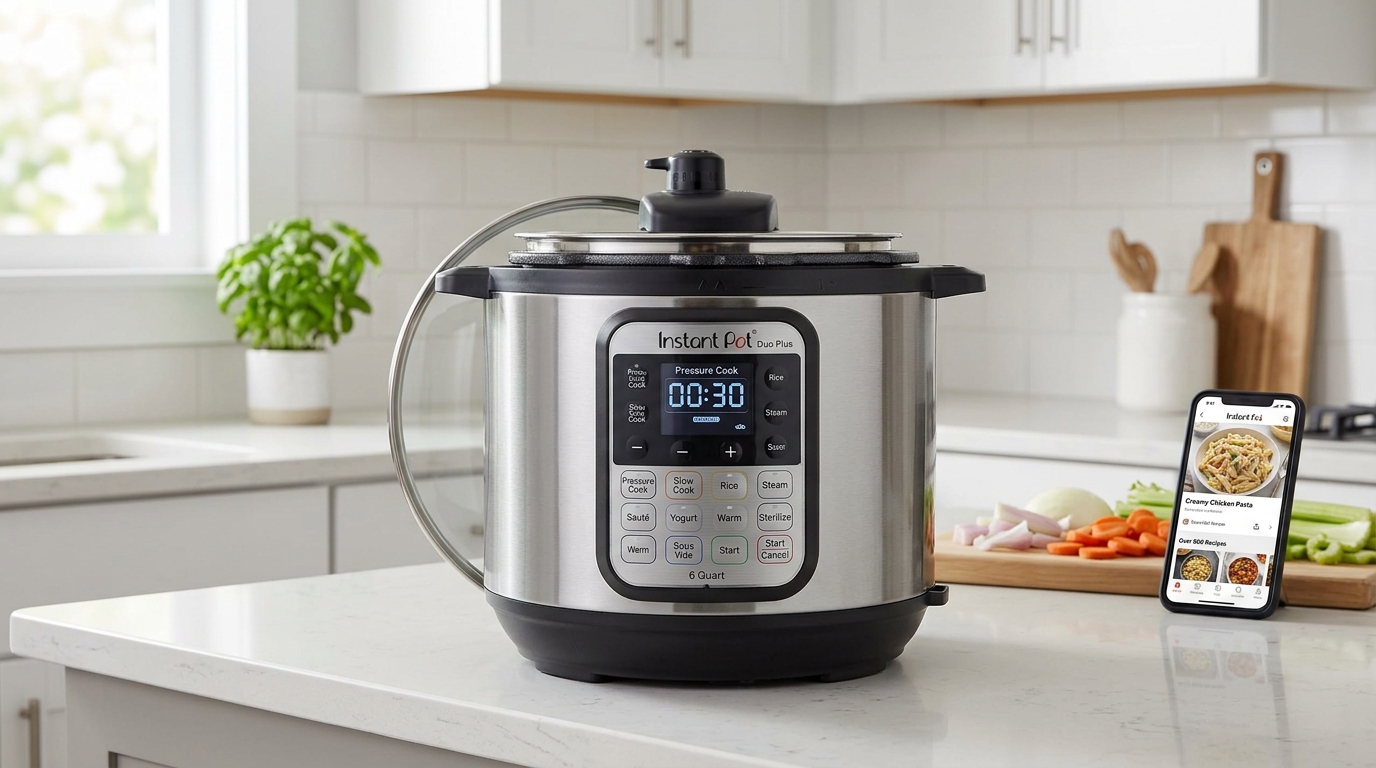
Kitchen appliances have quietly become more capable over the past several years, and the multi-cooker category is one of the clearest examples of that shift. What once required a separate rice cooker, a slow cooker, a steamer, and a pressure cooker taking up cabinet space has, for a growing number of households, been folded into a single countertop appliance. The Instant Pot Duo Plus 9-in-1 sits within this category, offering nine cooking functions in a 6-quart stainless steel unit, along with access to a companion app that includes a library of more than 800 recipes.
This article is meant to walk through what this kind of appliance actually does, in plain terms, without leaning on sales language or personal claims of use. Instead, the focus is on explaining the individual functions, how they’re generally applied in real cooking situations, who tends to get the most out of an appliance like this, and what’s genuinely worth thinking through before adding one to a kitchen. If you’ve been considering whether a multi-cooker fits your cooking style, the information below should give you a clearer, more grounded picture.
Key Features
The “9-in-1” label refers to nine separate cooking functions built into a single housing. Understanding what each one actually involves helps clarify the appliance’s overall scope.
Pressure Cooking This is the function most closely associated with the Instant Pot brand. It uses a sealed lid and pressurized steam to raise the boiling point of water inside the pot, which allows food to cook considerably faster than it would using conventional open-pot methods. This is particularly noticeable with ingredients that traditionally take a long time to soften, such as dried beans, whole grains, or tougher cuts of meat.
Slow Cooking The same base unit can switch into a slow cook mode, replicating the low, steady heat associated with traditional slow cookers. This setting is generally used for dishes that benefit from several hours of gentle cooking, such as pulled meats, stews, or dishes with a lot of aromatics that need time to develop flavor.
Rice Making A dedicated rice function is included, designed to produce consistent results across different rice varieties without requiring the cook to monitor water levels or timing manually, the way stovetop rice preparation typically demands.
Steaming Steaming relies on the same pressurized system used for pressure cooking, but applies it to foods like vegetables, seafood, or dumplings that benefit from shorter cook times and don’t need to be fully submerged in liquid.
Sautéing Before or after other cooking steps, the sauté function allows for browning meat, softening onions and garlic, or reducing a sauce, all within the same pot. This is a detail some cooks find genuinely useful, since it means fewer pans are dirtied over the course of preparing a single dish.
Yogurt Making A specific yogurt setting maintains a steady, low temperature over an extended period, which is the exact condition milk needs to properly culture into yogurt. This function isn’t found on every pressure cooker, and it opens up a fairly different use case compared to the rest of the appliance’s savory-leaning functions.
Warming Once food has finished cooking, the warm function holds it at a food-safe temperature without continuing to cook it further, which can help when coordinating multiple dishes that finish at different times.
Sterilizing A sterilize setting uses high heat to sanitize items such as baby bottles, jars, or utensils, offering an alternative to boiling items separately on the stovetop.
General Multi-Cooking Beyond these eight specific settings, the appliance is broadly designed to handle a wide range of recipes written specifically for multi-function pressure cookers, giving it flexibility beyond any single named function.
The stainless steel inner pot is a detail worth noting on its own, since it tends to hold up to metal utensils and higher-heat searing better than non-stick coated alternatives, and the companion app is intended to give both new and experienced users a structured way to explore the appliance’s full range of capabilities.
How It Can Be Used
Given how many functions are packed into this appliance, the ways it gets used in practice tend to vary quite a bit depending on the household.
For many people, the appeal starts with cutting down cooking time on weeknights. Dishes that would otherwise require an hour or more of simmering, like a hearty chili or a braised chicken dish, can often be finished in a fraction of that time using the pressure function, which matters for anyone trying to get a home-cooked meal on the table without a long prep-to-plate window.
Batch cooking is another common application, particularly given the 6-quart capacity, which sits in a comfortable middle range for households of two to four people. Cooking a large pot of grains, shredded chicken, or beans in one go and portioning it across several meals is a fairly typical pattern among people trying to streamline their weekly routine.
Some households lean more heavily on the slow cook function, especially for meals that are easier to start in the morning and let finish over the course of the day, without needing a completely separate slow cooker taking up space elsewhere in the kitchen.
Steamed dishes, whether vegetables, seafood, or dumplings, are another practical use, especially for people who prefer the texture steaming produces compared to boiling.
Homemade yogurt is a more specific use case, but a genuinely popular one among households that go through yogurt regularly and want more control over ingredients, sweetness, or thickness than pre-packaged options generally allow.
And for many people, the real value shows up in combining functions within a single recipe — searing meat with the sauté setting, adding liquid and pressure cooking it, then finishing with a reduction using the sauté function again, all inside the same pot. That kind of workflow is where a multi-cooker tends to differentiate itself most clearly from a single-purpose appliance.
Who It May Be Suitable For
Not every kitchen needs the same appliance, and it’s worth thinking specifically about who this type of multi-cooker tends to suit best.
Busy households juggling work, school schedules, or other commitments often find the shorter cook times associated with pressure cooking genuinely useful for keeping home-cooked meals realistic on a tight schedule.
Households of two to four people are generally well matched to the 6-quart capacity, which offers enough room for a solid family meal or a moderate batch-cooking session without being oversized for smaller day-to-day cooking.
People trying to consolidate kitchen appliances — replacing a separate rice cooker, slow cooker, steamer, and yogurt maker with one unit — may find real practical value here, particularly in kitchens where counter or storage space is limited.
Home cooks newer to pressure cooking may benefit from the companion app’s recipe library, which can serve as a structured starting point rather than requiring immediate trial and error with unfamiliar cook times and liquid ratios.
Anyone interested in trying homemade yogurt without buying a separate yogurt maker may find the built-in function a reasonably low-commitment way to experiment with it.
On the other hand, individuals who cook mostly for themselves, live in especially tight kitchen spaces, or strongly prefer traditional stovetop techniques may find a smaller or simpler appliance a better match, since a 6-quart, nine-function unit may offer more capacity and complexity than their day-to-day cooking actually requires.
Important Things to Consider
Before deciding whether this kind of appliance fits your kitchen, there are a few practical points worth thinking through.
There’s a learning curve with pressure cooking specifically. Unlike slow cooking or sautéing, which map fairly closely to familiar stovetop techniques, pressure cooking involves its own set of considerations — liquid ratios, natural versus quick pressure release, and cook times that don’t always match conventional recipes. New users often find it helpful to start with a handful of straightforward recipes from the included app before branching out.
Counter and storage space matter. A 6-quart unit is a reasonably sized appliance, and it’s worth measuring your available space before assuming it will fit neatly into your existing kitchen layout, particularly if you plan to keep it out on the counter rather than storing it away between uses.
Cleaning involves a few specific components. Beyond the inner pot, the lid and sealing ring need regular attention. The sealing ring in particular is known to pick up odors from strongly flavored dishes over time, and many users find it useful to have a second ring on hand for switching between savory and sweet cooking, or to clean and air it out thoroughly between uses.
Existing recipes often need adjustment. Recipes originally written for stovetop or oven cooking generally require changes to liquid amounts and cook times to work properly under pressure, since the sealed, pressurized environment behaves differently from an open pot. This isn’t necessarily difficult, but it does involve some adaptation, or a reliance on recipes specifically written for pressure cooking.
Not every function will be used equally. Some buyers end up relying heavily on two or three of the nine functions, while others explore the full range. It’s worth being honest with yourself about which functions you’re actually likely to use regularly, since that can help clarify whether the appliance’s breadth is a genuine benefit for your household or more capability than you need.
App reliance varies by user. The companion app can be a helpful resource, especially early on, but some people prefer to rely mainly on the physical control panel and their own recipe sources over time. It’s worth considering how much you expect to lean on app-based guidance versus other methods.
Comparison of General Categories
Rather than comparing this specific appliance to individual competing products, it’s often more useful to compare broader categories of kitchen appliances, since that helps clarify what kind of device is actually the right fit for your needs.
Multi-function cookers versus single-purpose pressure cookers. A dedicated pressure cooker, without additional functions, is often simpler to learn and operate, and may appeal to someone who only ever plans to pressure cook. Multi-function units trade some of that simplicity for versatility, which tends to matter more to households looking to reduce the total number of appliances they own.
Multi-function cookers versus dedicated slow cookers. Traditional slow cookers are typically straightforward, single-purpose devices, and some people specifically prefer their simplicity. What they lack is the faster cooking option that pressure cooking provides, which becomes relevant for anyone who’s regularly short on time but still wants the flavor benefits of long, slow cooking on occasion.
Multi-function cookers versus dedicated rice cookers. A dedicated rice cooker is often fine-tuned specifically for rice texture, and heavy rice-eaters sometimes prefer the consistency of a single-purpose unit. A built-in rice function on a multi-cooker is generally solid for everyday use, but it’s worth comparing results directly if rice preparation is a daily, non-negotiable part of your routine.
Multi-function cookers versus conventional stovetop and oven cooking. Stovetop and oven methods offer more direct, hands-on control throughout the cooking process, which some cooks genuinely prefer, especially for dishes where visual monitoring matters. Multi-cookers trade some of that hands-on control for convenience and reduced active cooking time, a trade-off that appeals more to some households than others depending on cooking style and time available.
In most cases, the right choice isn’t about which category is objectively superior, but about which one lines up with how you actually cook day to day, how much kitchen space you have, and how much you value convenience relative to hands-on control.
Frequently Asked Questions
Does this appliance replace the need for a separate slow cooker? For many households, yes, since the slow cook function is built directly into the unit. Some people still prefer a dedicated slow cooker for very long, unattended cooking sessions, but for typical use, the built-in function is generally sufficient.
Is pressure cooking safe to use regularly? Modern electric pressure cookers, including multi-function models like this one, generally include several built-in safety mechanisms, such as lids that lock and won’t open while the unit is pressurized. As with any kitchen appliance, following the manufacturer’s instructions closely is important for safe, consistent use.
Can this type of appliance be used to bake? Some multi-cookers, when paired with the right accessories, can be used for certain baking-style dishes, such as cheesecakes or steamed cakes, using the pressure or steam function. Results and available options tend to vary depending on the specific accessories used and the recipe followed.
How much faster is pressure cooking compared to regular stovetop methods? This depends heavily on the specific dish, but pressure cooking is generally associated with meaningfully shorter cook times for foods that traditionally take a long time to soften, such as dried beans or tougher cuts of meat, compared to standard stovetop or oven methods.
Do I need special recipes for pressure cooking, or can I adapt my own? It’s generally recommended to either use recipes specifically written for pressure cooking or adapt your own recipes with attention to liquid quantities and cook times, since the sealed, pressurized environment behaves differently from open-pot cooking.
Is the stainless steel inner pot dishwasher safe? Many stainless steel inner pots used in this type of appliance are generally considered dishwasher safe, though it’s worth checking the specific care instructions that come with the unit, since details can vary.
What ingredients are needed to make yogurt using the yogurt function? Making yogurt typically requires milk and a small amount of starter culture or existing yogurt containing active cultures, along with the appliance’s ability to hold a steady, low fermentation temperature over several hours.
Conclusion
The Instant Pot Duo Plus 9-in-1 reflects a broader pattern in modern kitchens: consolidating several distinct appliance functions into a single, more space-efficient device capable of handling everything from quick pressure-cooked weeknight meals to slow-simmered dishes, steamed vegetables, and homemade yogurt. How useful it ends up being in your own kitchen depends largely on how many of those nine functions you’d realistically use, how much counter or storage space you have available, and how comfortable you are adapting to a somewhat different cooking method compared to traditional stovetop techniques.
For households looking to reduce the number of separate appliances cluttering their kitchen while gaining faster cook times on certain dishes, this type of multi-cooker can be a genuinely practical fit. For those who prefer dedicated, single-purpose tools or simply don’t cook the kinds of dishes that benefit from pressure or slow cooking, it may offer more than what’s actually needed. As with most kitchen equipment, weighing these factors against your own habits is the most reliable way to figure out whether it belongs on your counter.